
Opportunities
Past Short-Term Studentships
2025 cohort
Van Dung Le (CERN / Kraków)
Van Dung Le undertook an MCnet short-term studentship at CERN in 2025, building on recent work proposing a novel strategy to measure quark and gluon jet properties at the LHC. The approach exploits measurements performed at multiple centre-of-mass energies, which can be combined to statistically disentangle quark- and gluon-initiated jet samples without relying on event-by-event tagging.
During the studentship, the project focused on assessing the feasibility of applying this method using publicly available CMS Open Data. The goal was to determine whether the proposed observables—illustrated using a range of jet angularities—can be robustly extracted from open experimental datasets, with a view to providing new inputs for improving the modelling of quark and gluon jets in Monte Carlo event generators.
Bernanda Telalovic (Graz)
Bernanda Telalovic undertook an MCnet short-term studentship at Graz in 2025, focusing on the development of hadronisation models informed by colour evolution dynamics.
The project aimed to strengthen the connection between colour evolution equations—implemented in the CVolver program—and the cluster hadronisation and colour-reconnection models in the Herwig event generator. The work studied the dynamics of cluster formation, including colour reconnection, cluster fission, and extensions of pre-confinement, with the goal of adapting Herwig’s hadronisation mechanisms to more closely reflect colour evolution principles. Comparisons with existing experimental data, including measurements from ALICE, were explored to assess the phenomenological impact of these developments.
Saad El Farkh (Lund)
Saad El Farkh undertook an MCnet short-term studentship at Lund in 2025. His project explored alternative strategies for generating next-to-leading-order (NLO) accurate event samples with reduced computational cost.
The work investigated an approach in which leading-order events are generated first and subsequently reweighted to achieve NLO accuracy. This strategy was studied in the context of MC@NLO- and MC@NLO-Δ-matched calculations, with a particular focus on the generation of so-called S-events, which retain the kinematics of the underlying leading-order configurations.
2021 cohort
Max Knobbe (Glasgow)
Max Knobbe undertook an MCnet short-term studentship at Glasgow in 2021, focusing on performance improvements for parton-distribution-function (PDF) evaluations, resulting in a publication (arxiv:2209.00843). His work included the introduction of caching and vectorisation strategies, the development of new smooth interpolation schemes, and the exploration of a GPU interface for PDF evaluation within the LHAPDF framework.
Sukanya Sinha (Glasgow)
Sukanya Sinha undertook an MCnet short-term studentship at Glasgow in 2021. Her project explored energy-flow polynomials (EFPs) as a general basis for describing jet substructure and studied their application in identifying observables sensitive to Beyond the Standard Model scenarios involving semi-visible jets.
The work also included investigations of dark-QCD parton showering effects using the Herwig event generator, with the aim of understanding how such signatures manifest in jet-substructure observables and how they might be distinguished from Standard Model backgrounds.
Antonio Paz (Karlsruhe)
Antonio Paz undertook an MCnet short-term studentship at Karlsruhe in 2021. His project focused on studies of event sphericity in minimum-bias collisions using data from the ALICE experiment.
Aayushi Singla (Karlsruhe)
Aayushi Singla undertook an MCnet short-term studentship at Karlsruhe in 2021. Her project investigated non-perturbative effects in dijet production in the context of CMS analyses.
Manna Laboni (Louvain)
Manna Laboni undertook an MCnet short-term studentship at Louvain in 2021, working on the implementation of asymmetric collisions in MG5_aMC in order to support next-to-leading-order calculations with asymmetric beam configurations.
Andrew Lifson (Louvain)
Andrew Lifson undertook an MCnet short-term studentship at Louvain in 2021, during which he updated the MadGraph code to evaluate colour-ordered amplitudes and studied the speed and accuracy of different approximations in the treatment of colour space. The results of this work were published in European Physical Journal C 82 (2022) 1144.
Naomi Cooke (Lund)
Naomi Cooke undertook an MCnet short-term studentship at Lund in 2021, focusing on the modelling of quarkonium production within parton showers. Her project aimed to incorporate quarkonium splitting functions into the Pythia8 framework in order to improve the description of quarkonium production inside jets.
The work included comparisons with alternative generators and with LHCb and CMS measurements, motivated by observed discrepancies between data and existing hard-production models for quarkonium kinematics.
Joon-Bin Lee (Manchester)
Joon-Bin Lee undertook an MCnet short-term studentship at Manchester in 2021, focusing on the implementation of Beyond the Standard Model (BSM) radiation within the parton-shower framework of the Herwig7 event generator.
His project developed a general, process- and model-independent approach to
BSM parton showers based on direct translations of Universal FeynRules Output (UFO)
models via Herwig’s ufo2herwig interface. Helicity-dependent branching kernels were
derived for all relevant splittings of scalars, fermions, and vector bosons,
consistent with Herwig’s angular-ordered shower, and used to construct BSM splitting
functions in the quasi-collinear limit. The resulting implementation was validated against
fixed-order matrix-element calculations and demonstrated the phenomenological impact of BSM
radiation at the LHC. This work resulted in a peer-reviewed publication
(arXiv:2312.13125).
Soumya Mukherjee (Manchester)
Soumya Mukherjee undertook an MCnet short-term studentship at Manchester in 2021. His project studied diphoton background processes relevant to Higgs analyses, comparing predictions from different parton-shower models in Herwig and validating them against LHC data. The work aimed to enable improved modelling of these backgrounds for Run-3 LHC analyses.
Sihyun Jeon (UCL)
Sihyun Jeon undertook an MCnet short-term studentship at UCL in 2021. His project explored the integration of MadGraph-based event generation with the Contur framework, extending the range of theoretical predictions that can be systematically confronted with LHC measurements. This work contributed to a subsequent publication (arXiv:2210.13496).
Dominic Stafford (Vienna)
Dominic Stafford undertook an MCnet short-term studentship at Vienna in 2021, working on the simulation of strongly interacting dark sectors (“dark showers”) and their hadronisation.
His project focused on implementing Hidden Valley–type scenarios within the Herwig7 event generator, using angular-ordered parton showers and the cluster hadronisation model. The work studied the scale hierarchies relevant for dark-sector dynamics and explored how variations of dark-sector parameters affect observables such as thrust, angularities, and correlation functions within the dark sector. The project also examined uncertainties arising from limited knowledge of hadronisation parameters in these scenarios. This work formed the basis of a subsequent publication (arXiv:2408.10044).
2020 cohort
Kiran Ostrolenk (Louvain)
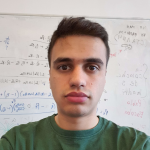
Kiran Ostrolenk was a PhD student working on next-to-leading-order (NLO) matching in the Herwig event generator during his MCnet short-term studentship at Louvain. As part of this work, he implemented helicity recycling in MadGraph, ensuring that external spinors and internal propagators are computed only once for a given helicity configuration. This optimisation is particularly important when summing amplitudes over all possible helicities and resulted in speed improvements of up to 50% for complex processes such as gg → ggttbar and pp → W+W-jj.
Jack Araz (Glasgow)
Jack Araz undertook an MCnet short-term studentship at Glasgow in 2020. His project focused on the implementation of the HEPTopTagger jet-substructure algorithm within the Rivet and MadAnalysis5 frameworks, enabling systematic studies of boosted top-quark tagging at particle level.
Using these implementations, he investigated how interference effects in top-quark effective field theory (EFT) scenarios can impact tagging efficiency and purity in boosted top analyses. The study assessed the potential bias such effects could introduce in EFT coefficient extractions and limits derived from boosted-top data. This work contributed to a subsequent publication (arXiv:2303.03427).
Suman Deb (Göttingen)
Suman Deb was a PhD student in experimental physics at the Indian Institute of Technology Indore (India) at the time of his MCnet short-term studentship. His doctoral research focused on event-shape analyses with the ALICE experiment at the LHC. During his visit to Göttingen, supported by MCnetITN, he worked on improving the modelling of underlying-event simulations in the Sherpa event generator.
Matthew de Angelis (Karlsruhe)
Matthew de Angelis undertook an MCnet short-term studentship at Karlsruhe in 2020. His work focused on the treatment of hard–collinear emissions in parton-shower algorithms.
Mees van Kampen (Lund)
Mees van Kampen undertook an MCnet short-term studentship at Lund in 2020, studying the structure of initial- and final-state radiation in the Pythia8 parton-shower framework with a view towards incorporating transverse-momentum–dependent (TMD) parton densities.
The project analysed emission kinematics and recoil strategies in deep-inelastic scattering events, identifying the impact of different recoil prescriptions on transverse-momentum distributions. This work established a foundation for the future development of a TMD-based initial-state shower, using the SimpleSpace shower as a template and exploring modifications to evolution scales and Sudakov form factors.
Adam Takacs (Lund)
Adam Takacs undertook an MCnet short-term studentship at Lund in 2020. Due to pandemic-related constraints, the original project plan was adapted, and his work focused on two complementary studies in jet substructure and heavy-ion phenomenology.
The first involved a higher-order analytic calculation of the dynamical grooming observable, achieving next-to-next-to-double-logarithmic accuracy and enabling direct comparison with LHC measurements. The second studied jet observables in the presence of medium-induced energy loss, combining coherent energy loss with the Gyulassy–Levai–Vitev emission spectrum and exploring novel heavy-ion analysis techniques. Both projects resulted in peer-reviewed publications and conference presentations.
James Black (Lund)
James Black undertook an MCnet short-term studentship at Lund in 2020. At the time, he was a PhD student working on the High Energy Jets (HEJ) project.
Patrick Kirchgaesser (Manchester)
Patrick Kirchgaesser undertook an MCnet short-term studentship at Manchester in 2020. His work focused on further integrating diffractive scattering models into the existing eikonal framework for multiple parton interactions in Herwig. He also contributed to the development of the CVolver library for amplitude-level parton branching.
Mohammed Altakach (UCL)
Mohammed Altakach undertook an MCnet short-term studentship at UCL in 2020. His project focused on incorporating Standard Model predictions for jet cross sections into the Contur framework, enabling systematic comparisons between precision collider measurements and Monte Carlo predictions. This work contributed to a subsequent publication (arXiv:2111.15406).
2019 cohort
Stefan von Buddenbrock (Louvain)
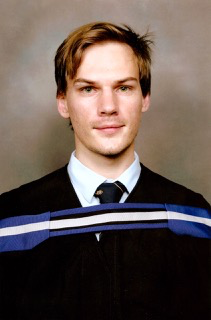
Stefan von Buddenbrock undertook an MCnet short-term studentship at CP3 in 2019, where he worked on improving the computational efficiency of the Matrix Element Method for signal processing in particle physics. He completed his visit in June 2019. At the time, he was a PhD student at the University of the Witwatersrand (South Africa), where he subsequently completed his doctoral studies.
Jeremy Baron (Göttingen)
Jeremy Baron was a PhD student in theoretical physics at the University at Buffalo (USA) at the time of his MCnet short-term studentship in 2019. His doctoral research focused on jet-substructure methods. During his visit to Göttingen, supported by MCnetITN3, he worked with the local team on tuned comparisons of the Sherpa Monte Carlo event generator with analytically resummed predictions, as well as on phenomenological aspects of jet substructure and event-grooming techniques. The results of this work were published in JHEP 07 (2021) 142.
Emma Simpson Dore (Vienna)
Emma Simpson Dore undertook an MCnet short-term studentship at Vienna in 2019, working on the theoretical foundations of higher-order parton-shower algorithms.
Her project investigated the singularity structure of next-to-leading-order splitting kernels relevant for parton-shower evolution in the Herwig event generator. In particular, the work examined the interplay between soft and collinear limits of QCD radiation, with the aim of organising these singularities in a systematic and algorithmic way suitable for efficient numerical implementation. This study contributed to ongoing efforts to develop higher-logarithmic-accuracy parton showers and to improve the precision of event simulation.
2018 cohort
Cody Duncan (Karlsruhe)
Cody Duncan undertook an MCnet short-term studentship at Karlsruhe in 2018, working on the development of a space–time-based colour-reconnection model in the Herwig7 event generator.
The project aimed to extend the traditional energy–momentum picture of event generation by introducing explicit space–time coordinates during multiple parton interactions and parton showering. Transverse interaction points were modelled using proton form factors and their overlap, reflecting the finite size of the colliding protons and the resulting causal structure. During shower evolution, parton propagation distances were assigned according to emission scales, allowing the geometry of the event to evolve dynamically. This framework enabled colour reconnection to be driven by space–time proximity between partons and interaction systems, providing a physically motivated mechanism for modifying colour topology during hadronisation.
Armando Bermudez Martinez (Lund)
Armando Bermudez Martinez undertook an MCnet short-term studentship at Lund in 2018, focusing on azimuthal correlations between leading jets in multi-jet events. His project investigated tensions observed by CMS between data and theoretical predictions for nearly back-to-back dijet configurations.
The work studied the impact of parton-shower modelling choices on the azimuthal separation of leading jets, including renormalisation-scale choices, recoil strategies, soft-gluon coherence, and shower ordering schemes. Comparisons were performed using several shower implementations, including Pythia8, VINCIA, Herwig7, and DIRE. Additional studies explored rapidity-dependent measurements and correlated jet-substructure observables, such as jet angularities, as well as discrepancies observed in four-jet events using merged leading-order samples. These investigations formed a significant component of his PhD thesis.
Oleh Fedkevych (Lund)
Oleh Fedkevych undertook an MCnet short-term studentship at Lund in 2018, working on the modelling of double parton scattering (DPS) in proton–proton and proton–nucleus collisions using the Pythia8 event generator.
His project compared different approaches to modelling double parton distribution functions, including double-DGLAP evolution and the Pythia framework based on dynamical PDF modification. The work examined the treatment of longitudinal correlations and perturbative “1→2” splitting contributions, identifying regions of agreement and significant differences between models. As part of this effort, asymmetries in the original Pythia DPS implementation were resolved through the introduction of symmetrised dPDFs, a change adopted in Pythia version 8.240. The project also investigated DPS enhancement effects in pA collisions using the Angantyr model, with results presented at the MPI@LHC Workshop in 2018.
2017 cohort
Federico Ambrogi (Louvain)
During his MCnet short-term studentship, Federico Ambrogi worked on the development of new features for MadDM, a plugin of the MadGraph5_aMC@NLO framework for Dark Matter phenomenology. The focus of the project was the preparation and release of MadDM version 3.0.
A central new feature of MadDM 3.0 is a dedicated module for computing theory predictions for Dark Matter annihilation and for comparing them with experimental constraints from the Fermi-LAT experiment on gamma-ray emission from dwarf spheroidal galaxies. This module complements and extends the capabilities of earlier versions, which focused on relic-density calculations and direct-detection rates, making MadDM 3.0 a comprehensive tool for Dark Matter studies.
MadDM 3.0 provides a user-friendly interface with two running modes. The precision mode is based on a full Monte Carlo simulation chain combined with a detailed evaluation of Fermi-LAT limits and can be applied to generic models and final states. The fast mode, while restricted to two-body annihilation into Standard Model final states, enables efficient scans of large parameter spaces using precomputed experimental constraints.
Version 3.0 was released in March 2018 together with an extended user manual (arXiv:1804.00044), which was later accepted for publication in Physics of the Dark Universe.
Federica Fabbri (Göttingen)
Federica Fabbri undertook an MCnet short-term studentship in Göttingen in 2017, working on the reinterpretation of LHC measurements to constrain models predicting resonant top–quark pair production. Her project focused on comparing state-of-the-art Monte Carlo simulations with particle-level measurements of the top–antitop invariant mass distribution in semi-leptonic final states.
The study considered both resolved and boosted top-quark decay regimes and explored simplified models featuring scalar resonances decaying to top quarks, including CP-even and CP-odd as well as colour-singlet and colour-octet scenarios. Exclusion limits were derived across the corresponding model parameter spaces. This work resulted in a publication in JHEP 03 (2018) 022.
2016 cohort
David Yallup (Karlsruhe)
David Yallup undertook an MCnet short-term studentship at Karlsruhe in 2016. His project focused on the simulation of vector-boson-fusion processes at next-to-leading order for ATLAS analyses.
Graeme Nail (Karlsruhe)
Graeme Nail undertook an MCnet short-term studentship at Karlsruhe in 2016. His work involved a detailed appraisal of heavy-flavour–initiated processes in perturbative QCD.
Priyanka Priyanka (Karlsruhe)
Priyanka Priyanka undertook an MCnet short-term studentship at Karlsruhe in 2016. Her project studied background contributions to single-top tW production arising from ttbar events.
Helen Brooks (Lund)
Helen Brooks undertook an MCnet short-term studentship at Lund in 2016. Her project focused on CKKW matching and merging techniques in conjunction with the High Energy Jets framework.
Nadine Fischer (Lund)
Nadine Fischer undertook an MCnet short-term studentship at Lund in 2016, working on hadronisation modelling in the Pythia8 event generator.
Kyle Cormier (Manchester)
Kyle Cormier undertook an MCnet short-term studentship at Manchester in 2016, focusing on the modelling of top–quark pair production and decay in next-to-leading-order plus parton-shower (NLO+PS) simulations within the Herwig event generator.
His project carried out a detailed assessment of theoretical uncertainties in NLO+PS predictions for t\bar{t} production, including systematic comparisons between different matching schemes and between Herwig’s angular-ordered and dipole parton-shower algorithms. As part of this work, extensions to the Herwig dipole shower were developed to properly account for quark-mass effects and to enable consistent simulation of top-quark decays. Predictions were studied at parton level and compared to LHC measurements, including in boosted top-quark regimes, highlighting regions where large modelling uncertainties arise when using non-top-specific generator tunes. This work resulted in a peer-reviewed publication (arXiv:1810.06493) and was complemented by a topical review summarising contemporary developments in top-quark simulation in Herwig (arXiv:1711.11570).
2015 cohort
Radek Podskubka (Karlsruhe)
Radek Podskubka undertook an MCnet short-term studentship at Karlsruhe in 2015. His work focused on the validation of jet production at next-to-leading order in Herwig/Matchbox for ATLAS.
Radek Zlebcik (Lund)
Radek Zlebcik undertook an MCnet short-term studentship at Lund in 2015, focusing on central exclusive production processes in Pythia8.
2014 cohort
Emma Kuwertz (CERN)
Emma Kuwertz undertook an MCnet short-term studentship at CERN in 2014. Her project developed jet-substructure observables designed to probe beyond–leading-logarithmic aspects of QCD parton showers.
Sabrina Sacerdoti (CERN)
Sabrina Sacerdoti undertook an MCnet short-term studentship at CERN in 2014. Her work explored scale-free observables in multijet events with the aim of identifying regions where matrix-element calculations or parton-shower descriptions are required.
Simone Amoroso (CERN)
Simone Amoroso undertook an MCnet short-term studentship at CERN in 2014. His project studied the impact of systematic uncertainties and their correlations on Monte Carlo generator tuning.
Jesper Roy Christiansen (CERN)
Jesper Roy Christiansen undertook an MCnet short-term studentship at CERN in 2014. His project developed a new colour-reconnection model for PYTHIA 8 based on SU(3) group weights.
Faten Hariri (Louvain)
Faten Hariri undertook an MCnet short-term studentship at Louvain in 2014. Her project implemented tau-lepton decays with full spin correlations in MadGraph5_aMC@NLO via the TauDecay framework.
Spyridon Argyropoulos (Lund)
Spyridon Argyropoulos undertook an MCnet short-term studentship at Lund in 2014, studying colour-reconnection effects in top-quark physics
Marek Sirendi (Lund)
Marek Sirendi undertook an MCnet short-term studentship at Lund in 2014. His project studied W-boson production in the LHCb experiment.
Gagik Vardanyan (Manchester)
Gagik Vardanyan undertook an MCnet short-term studentship at Manchester in 2014. His project investigated non-perturbative corrections to jet observables using different Monte Carlo event generators. The work compared the eigentunes approach with more traditional techniques for estimating modelling uncertainties.
Nicola Orlando (UCL)
Nicola Orlando undertook an MCnet short-term studentship at UCL in 2014. His project focused on the modelling and tuning of Z + b(bbar) production using Monte Carlo event generators.
2013 cohort
Nathan Hartland (Göttingen)
Nathan Hartland undertook an MCnet short-term studentship in Göttingen in 2013. During his visit, he contributed to the development of MCgrid, a software package designed to interface Monte Carlo event generators with interpolation tools for fast reweighting and parameter variations in perturbative QCD calculations.
The work focused on integrating MCgrid with the Rivet analysis framework, enabling a direct correspondence between Rivet histogram objects and interpolation grids. This allowed efficient variations of scales, coupling parameters and parton distribution functions without the need to rerun full event simulations. MCgrid was developed and tested primarily with the Sherpa event generator, while remaining compatible with any generator producing events in the HepMC format. This work led to a peer-reviewed publication in 2014 (arXiv:1312.4460).
2010 cohort
Nishita Desai (CERN)
Nishita Desai undertook an MCnet short-term studentship at CERN in 2010. Her work studied R-parity-violating supersymmetry and generic Beyond the Standard Model scenarios using Pythia8.
Holger Schulz (CERN)
Holger Schulz undertook an MCnet short-term studentship at CERN in 2010. His project studied the energy scaling of minimum-bias proton–proton collisions.
Kenneth Wraight (CERN)
Kenneth Wraight undertook an MCnet short-term studentship at CERN in 2010. His project studied forward–backward and azimuthal correlations in proton–proton collisions.
Magdalena Sławińska (Durham)
Magdalena Sławińska undertook an MCnet short-term studentship at Durham in 2010. Her project investigated the proper matching of NLO matrix elements with leading- and next-to-leading-order parton showers.
Aleksander Kusina (Durham / Manchester)
Aleksander Kusina undertook an MCnet short-term studentship in 2010, hosted at Durham and Manchester. His project studied next-to-leading-order parton-shower algorithms in the Herwig++ event generator.
Benjamin Watt (Karlsruhe)
Benjamin Watt undertook an MCnet short-term studentship at Karlsruhe in 2010. His project studied deep-inelastic scattering plus jet production in Herwig++ with applications to parton-distribution-function fits.
Sudha Ahuja (Karlsruhe)
Sudha Ahuja undertook an MCnet short-term studentship at Karlsruhe in 2010. Her project focused on the simulation of photon-plus-jet production using Herwig++.
Miroslav Myska (Karlsruhe)
Miroslav Myska undertook an MCnet short-term studentship at Karlsruhe in 2010. His work investigated double-parton-scattering effects in the Herwig++ event generator.
Phil Ilten (Lund)
Phil Ilten undertook an MCnet short-term studentship at Lund in 2010, working on the incorporation of spin effects into the Pythia8 event generator.
Irais Bautista Guzman (Lund)
Irais Bautista Guzman undertook an MCnet short-term studentship at Lund in 2010, developing a modified C++ implementation of the Q-PYTHIA routine.
Flavia Dias (UCL)
Flavia Dias undertook an MCnet short-term studentship at UCL in 2010. Her project compared leading- and next-to-leading-order predictions for Z + jets production, using Monte Carlo simulations as a tool for background estimation in new-physics searches at the LHC.
Christian Roehr (UCL)
Christian Roehr undertook an MCnet short-term studentship at UCL in 2010. His project performed Monte Carlo studies of pile-up effects in Higgs and subjet analyses.
Sercan Sen (UCL)
Sercan Sen undertook an MCnet short-term studentship at UCL in 2010. His project focused on soft diffractive dissociation and underlying-event modelling.
Avi Gershan (UCL / Sheffield)
Avi Gershan undertook an MCnet short-term studentship in 2010, hosted at UCL and Sheffield. His work focused on the implementation of novel Beyond the Standard Model processes in Pythia.
2009 cohort
Paolo Francavilla (CERN)
Paolo Francavilla undertook an MCnet short-term studentship at CERN in 2009. His work investigated the effects of underlying-event models on jet observables at the LHC.
Christopher Bignamini (Karlsruhe)
Christopher Bignamini undertook an MCnet short-term studentship at Karlsruhe in 2009. His project focused on the implementation and study of the Statistical Hadronisation Model in Herwig++.
Sparsh Navin (Lund)
Sparsh Navin undertook an MCnet short-term studentship at Lund in 2009. His work focused on the development of diffraction modelling in PYTHIA.
Seyi Latunde-Dada (Lund)
Seyi Latunde-Dada undertook an MCnet short-term studentship at Lund in 2009, working on next-to-leading-order matching and merging techniques.
Devdatta Majumder (Lund)
Devdatta Majumder undertook an MCnet short-term studentship at Lund in 2009, studying inclusive Wγ production in perturbative QCD.
Martijn Gosselink (Lund)
Martijn Gosselink undertook an MCnet short-term studentship at Lund in 2009, working on W+jets production, CKKW merging, and the Ariadne parton-shower framework.
Riccardo Di Sipio (UCL)
Riccardo Di Sipio undertook an MCnet short-term studentship at UCL in 2009. His project studied QCD background contributions to top-quark pair production.
2008 cohort
Michal Deák (CERN)
Michal Deák undertook an MCnet short-term studentship at CERN in 2008. His project studied gluon splitting to heavy quarks in parton-shower algorithms.
Alexander Flossdorf (CERN)
Alexander Flossdorf undertook an MCnet short-term studentship at CERN in 2008. His project focused on the simulation of top-quark production events.
Marek Schönherr (Durham)
Marek Schönherr undertook an MCnet short-term studentship at Durham in 2008. His project focused on the implementation and study of next-to-leading-order calculations in the Sherpa event generator.
Jonathan Ferland (Durham)
Jonathan Ferland undertook an MCnet short-term studentship at Durham in 2008. His work studied Minimal Walking Technicolour models using the Sherpa event generator.
Florian Bechtel (Lund)
Florian Bechtel undertook an MCnet short-term studentship at Lund in 2008. His project studied the underlying event in proton–proton collisions and its relation to multiple parton–parton interactions.
Noam Hod (UCL)
Noam Hod undertook an MCnet short-term studentship at UCL in 2008. His project focused on the development of a new exotic Monte Carlo simulation tool.
Manuel Bähr (UCL)
Manuel Bähr undertook an MCnet short-term studentship at UCL in 2008. His project investigated the soft component of the underlying event in hadronic collisions.
Piergiulio Lenzi (UCL)
Piergiulio Lenzi undertook an MCnet short-term studentship at UCL in 2008. His project compared predictions for Z/W + jets production at the LHC across different Monte Carlo event generators.